


Dreamlawns Quick Cut: Overwatering is one of the most common and most damaging lawn care mistakes in Virginia Beach. Too much water suffocates roots, invites fungal disease, encourages shallow root growth, and wastes money. The symptoms often look like underwatering, which leads homeowners to add even more water and make the problem worse. Recognizing the signs of an overwatered lawn early, and switching to a deep, infrequent watering schedule, is the key to a healthier, more resilient lawn.
Most homeowners assume that more water means a healthier lawn. In Virginia Beach’s humid coastal climate, the opposite is often true. Overwatering is one of the most common mistakes we see, and it’s one of the most deceptive, because the symptoms of an overwatered lawn frequently look almost identical to the symptoms of a lawn that’s not getting enough water.
That confusion is exactly what makes overwatering so damaging. A homeowner sees a struggling, yellowing lawn, assumes it’s thirsty, and responds by watering more. The extra water accelerates the very problem they were trying to solve, suffocating roots and feeding the fungal diseases that thrive in constantly wet conditions. The lawn gets worse, more water gets added, and the cycle continues.
The good news is that overwatering is correctable once you recognize it. This guide covers what overwatering does to a lawn, how to spot the signs, how the damage shows up differently across grass types, and how to fix an overwatered lawn in Virginia Beach’s specific climate.
What Does Overwatering Do to a Lawn?
To understand why overwatering is so harmful, it helps to understand what healthy soil actually looks like below the surface. Good soil isn’t solid. It’s full of tiny air pockets, called pore space, that hold the oxygen the grass roots need to function. When you overwater, those air pockets fill with water and stay filled, and the roots can no longer breathe.
Roots deprived of oxygen become stressed and weak, and in severe cases, they begin to rot. A lawn with compromised roots can’t absorb water or nutrients efficiently, which is why an overwatered lawn often looks exactly like a drought-stressed one. The roots are technically surrounded by water but are unable to use it. Beyond suffocating roots, overwatering causes several other forms of damage:
- Fungal disease: Constant moisture at the soil surface and in the turf canopy creates ideal conditions for the fungal diseases that are already a major concern in Virginia Beach’s humid climate.
- Shallow root systems: When water is always available at the surface, roots have no reason to grow deep in search of it. Shallow-rooted turf is far less drought-tolerant and far more fragile during heat and stress.
- Nutrient leaching: Excess water flushes nutrients down through the soil before the lawn can use them, wasting fertilizer and money while leaving the turf underfed.
- Thatch and compaction: Overly wet conditions accelerate thatch buildup and contribute to soil compaction, both of which further block water and air from reaching the root zone.
What Are the Signs of an Overwatered Lawn?
Overwatering produces a recognizable set of symptoms once you know what to look for. If your lawn shows several of these signs, too much water is a likely culprit, regardless of how the turf looks at first glance.
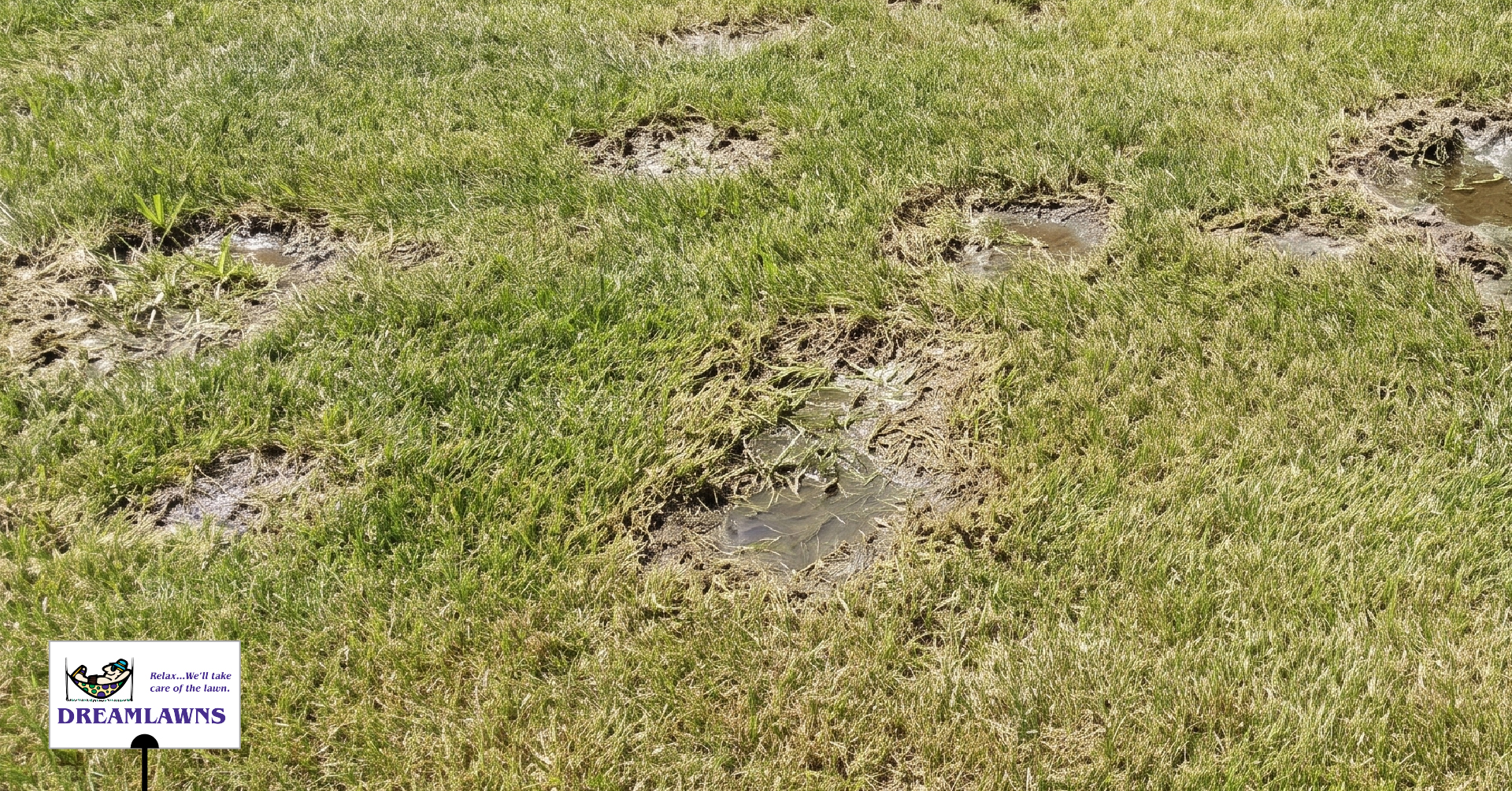
- Spongy or squishy ground: If the lawn feels soft and spongy underfoot, especially hours after watering or rain, the soil is holding too much moisture.
- Fungal disease and mushrooms: Visible disease patches or mushrooms popping up are strong indicators of excess moisture in the soil.
- Yellowing turf: Grass that yellows despite plenty of water is often suffering from oxygen-starved roots rather than a lack of nutrients.
- Thatch buildup: A thick, spongy thatch layer between the green growth and the soil surface is accelerated by overwatering.
- Shallow roots and lifting turf: If sections of turf lift easily or the grass pulls up with shallow roots attached, overwatering may be the cause.
- Increased weeds and moss: Nutsedge, moss, and other moisture-loving plants thrive in overwatered conditions and often signal a drainage or watering problem.
- Runoff and pooling: Water that runs off or pools on the surface instead of soaking in indicates the soil is already saturated.
- Wilting that doesn’t improve with water: Turf that looks wilted and stressed but doesn’t recover when you add more water is a classic sign of root damage from overwatering.
Why Is Overwatering So Easy to Confuse With Underwatering?
This is the trap that catches so many homeowners. Both overwatering and underwatering cause wilting, yellowing, and thinning turf. From a distance, a lawn drowning in too much water can look identical to a lawn dying of thirst. The natural instinct in both cases is to add water, which helps a thirsty lawn but pushes an overwatered one further toward collapse.
The key to telling them apart is to look below the surface and at the surrounding conditions rather than just at the grass blades. A few quick checks make the difference clear:
- Check soil moisture: Push a screwdriver or probe several inches into the soil. If it slides in easily and comes out damp or muddy, the soil is saturated, and overwatering is likely. If the soil is hard and dry below the surface, the lawn genuinely needs water.
- Look for fungal signs: Lesions on individual grass blades are the most reliable way to distinguish disease from stress. Look at the transition zone between healthy and damaged turf and check the blades themselves. Tan-colored lesions with dark brown or purple borders point to fungal disease, while drought-stressed blades curl and discolor without lesions. Mushrooms, disease patches, and a musty smell also point to overwatering and fungal activity, none of which show up in drought-stressed lawns.
- Sponginess versus footprinting: Spongy, soft ground means too much water. Footprints that linger on crisp, dry-feeling turf point to drought stress instead.
When the diagnosis still isn’t clear, the safest move is to stop watering and observe. An overwatered lawn will often begin to recover once it dries out, while a drought-stressed lawn will continue to decline. For more on distinguishing these and other causes of struggling turf, see our guides on why your lawn is turning brown and drought stress versus heat stress.
How Does Overwatering Affect Different Grass Types?
While the fundamentals of overwatering damage are the same across all lawns, the specific diseases and symptoms that show up depend on the grass type. Here’s how overwatering tends to manifest in each of the four grasses common to Virginia Beach.
Overwatered Tall Fescue
Fescue is especially vulnerable to overwatering in summer because it’s already heat-stressed during the warmest months. Adding excess moisture on top of that stress creates ideal conditions for brown patch and Pythium blight, two of the most damaging diseases for Fescue in this climate. The resulting thinning and dieback is frequently blamed on heat alone when overwatering is actually accelerating it. Because Fescue doesn’t spread to fill in damaged areas, overwatering-related thinning often requires fall overseeding to repair. For complete care guidance, see our Virginia Beach Fescue owner’s guide.
Overwatered Bermuda Grass
Bermuda has excellent drought tolerance, which means it needs less water than most homeowners assume, and that gap between perceived and actual need is exactly why overwatered Bermuda grass is so common. Excess water in Bermuda lawns drives dollar spot and large patch disease, and it dramatically accelerates thatch buildup in a grass that already produces thatch faster than almost any other. An overwatered Bermuda lawn develops a thick, spongy thatch layer and shallow rooting that undermines the very resilience Bermuda is known for. Signs of overwatered Bermuda grass include a soft, spongy feel underfoot, yellowing despite frequent watering, visible disease patches, and a thatch layer you can feel building up at the base of the turf. Because Bermuda tolerates drier conditions so well, the fix is usually to water significantly less than you think you need to. For complete care guidance, see our Virginia Beach Bermuda owner’s guide.
Overwatered St. Augustine
St. Augustine’s broad blades and dense canopy hold moisture readily, making it highly susceptible to the fungal diseases that overwatering encourages. Gray leaf spot and Pythium both thrive in the wet, humid conditions that overwatering creates, and chronic overwatering is also associated with take-all root rot, a serious root disease. There’s an additional trap specific to St. Augustine: chinch bug damage looks like drought stress, so homeowners often respond by watering more. If the real problem is chinch bugs, the extra water does nothing to stop them and creates disease conditions on top of the existing pest damage. For complete care guidance, see our Virginia Beach St. Augustine owner’s guide.
Overwatered Zoysia
Zoysia’s extremely dense growth habit makes it prone to rapid thatch accumulation, and overwatering accelerates that buildup considerably. Excess moisture in Zoysia lawns is also a primary driver of large patch disease, which appears as circular orange-brown patches at the seasonal transitions in spring and fall. Because Zoysia recovers from damage more slowly than any other warm-season grass, overwatering-related damage tends to linger far longer than it would in Bermuda, sometimes taking most of a growing season to fill back in. Like Bermuda, Zoysia is drought-tolerant once established and needs less water than homeowners often provide. For complete care guidance, see our Virginia Beach Zoysia owner’s guide.
What Causes Overwatering in Virginia Beach Lawns?
Overwatering in Virginia Beach usually isn’t the result of someone deliberately drowning their lawn. It’s the product of a handful of common habits and misconceptions that are easy to fall into in this climate.
- Irrigation systems on default schedules: Automatic irrigation systems running on a fixed timer keep watering regardless of recent rainfall or the season, which routinely delivers far more water than the lawn needs.
- Watering through frequent coastal rain: Virginia Beach gets significant rainfall, and watering on schedule without accounting for rain quickly oversaturates the soil.
- Watering at the wrong time of day: Evening or nighttime watering leaves the turf wet overnight, dramatically increasing fungal disease risk on top of the overwatering itself.
- Sandy soil misconceptions: Homeowners often assume sandy coastal soil needs constant watering. While sandy soil does drain faster, this leads many people to overcorrect and water far too frequently.
- Poor drainage and low spots: Areas that hold water after rain stay saturated long after the rest of the lawn has dried, creating localized overwatering even when the overall schedule is reasonable.
- Running irrigation through winter: Leaving irrigation on during the dormant season, when lawns need little to no supplemental water, is a common and damaging form of overwatering.
Most of these come down to watering on autopilot rather than watering based on what the lawn actually needs.
How Do You Fix an Overwatered Lawn?
Recovering an overwatered lawn starts with the obvious step, stop adding water, and then rebuild the conditions that support healthy roots. Here’s the recovery process.
- Stop watering and let the soil dry: The first step is to halt irrigation entirely and allow the saturated soil to dry out. This reintroduces oxygen to the root zone and gives stressed roots a chance to recover.
- Switch to deep, infrequent watering: Once the lawn has recovered, water deeply and infrequently, targeting roughly 1 to 1.5 inches per week delivered in one or two sessions rather than daily light watering. This trains the roots to grow deep and builds a more resilient lawn.
- Water early in the morning: Watering before 9 a.m. allows the turf to dry through the day, minimizing the overnight wetness that drives fungal disease.
- Account for rainfall: Install a rain sensor on automatic irrigation systems or manually monitor rainfall and skip watering when nature has already done the job.
- Improve drainage and relieve compaction: Core aeration relieves the compaction that traps water and improves drainage, helping the soil shed excess moisture more effectively.
- Treat any fungal disease: If overwatering has already triggered a disease outbreak, the disease needs to be treated alongside correcting the watering, or the damage will continue.
- Dethatch if needed: If overwatering has accelerated thatch buildup beyond a healthy level, dethatching during the appropriate season for your grass type restores water and nutrient movement to the root zone.
How Does Dreamlawns Help With Watering and Lawn Health?
Watering correctly sounds simple, but in practice, it depends on grass type, soil conditions, drainage, season, and weather, all of which change throughout the year. At Dreamlawns, we help Virginia Beach homeowners get watering right by tailoring guidance to their specific lawn rather than applying a one-size-fits-all schedule that leads to exactly the overwatering problems described here.
Our approach starts with understanding your grass type and its actual water needs, which vary significantly between drought-tolerant Bermuda and Zoysia and the more moisture-dependent Fescue and St. Augustine. We evaluate drainage and identify the low spots and compacted areas that hold water and create localized overwatering. When overwatering has already caused fungal disease or thatch problems, we address those directly as part of a year-round program that keeps the lawn healthy through every season.
The goal is always a lawn that’s watered correctly, deeply, infrequently, and in response to actual conditions, so it develops the deep roots and natural resilience that make it easier to maintain and far less prone to disease.
Contact us today to schedule a property assessment. We’ll evaluate your lawn’s watering, drainage, and overall health, and build a plan that protects it from the damage overwatering causes.
Frequently Asked Questions
The best mowing height for Tall Fescue in Virginia Beach is 4 inches, and it should never be cut below 3.5 inches. Keeping Fescue tall shades the soil, supports deeper roots, and improves resistance to drought, weeds, and disease. This is especially important in summer, when Fescue is already heat-stressed, and the taller canopy helps it hold up through the season.
Cutting grass too short, known as scalping, removes too much leaf surface at once. This depletes the carbohydrate reserves the plant needs for growth and recovery, exposes the soil to weed-germinating sunlight, weakens the root system, and stresses the turf. Scalping is especially damaging in summer when the lawn is already under heat stress, and for grasses like St. Augustine, whose above-ground stolons are physically damaged by cutting too low. Scalped lawns are more prone to weeds, drought damage, and disease.
Mow based on growth rate rather than a fixed schedule, cutting whenever the grass has grown about one-third above its target height. Tall Fescue grows fastest in spring and fall, often needing mowing every five to seven days during those periods. Warm-season grasses like Bermuda peak in summer and can need mowing every five to seven days, while slower-growing Zoysia typically needs it every seven to ten days. All grasses slow in their off-season and stop during winter dormancy for warm-season types.
Common Bermuda should be mowed at 1.5 to 2.5 inches, with most residential lawns doing best around 1.5 to 2 inches. Finer-textured hybrid varieties like Tifway 419 and TifTuf can be maintained lower, between 0.5 and 1.5 inches, but most homeowners don’t need to go that short.
Lawn Care Services In The Virginia Beach Area
Dreamlawns provides superior lawn care service to Virginia Beach & Chesapeake VA residents.

